SHEARS - TO CUT UP THE ALLOYED METALS
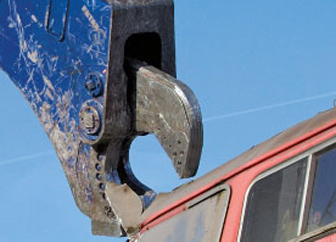
The alloyed metal is placed in a hopper by an excavator. The majority of the hoppers are also able to exert lateral pressure on the material, compressing the metals so that larger pieces are also pushed under the shears. The cutting length can be adjusted. The operator controls the shears from a control station or a loading machine. TSR operates facilities that have a cutting force of up to 1,250 tonnes as well as excavators equipped with hydraulic shears. These can be used to cut up pieces of the metals that are particularly large or heavy.
BALERS - TO PRESS LIGHTWEIGHT FERROUS METALS INTO BALES
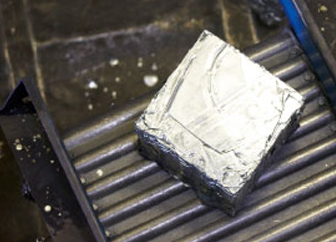
An excavator fills the baler with the ferrous metals. The material in the machine is then pressed into bales, the size of which depends on the requirements of our customers. Pressing lightweight metals and waste sheet metal into bales not only helps to reduce transport costs, it also means the bales are of a standard size for the furnaces at the steelworks. This, in turn, allows the furnaces to be fed more quickly and more efficiently.
CRUSHERS - TO BREAK UP CASTING
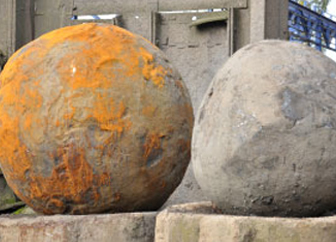
Our crushers are used to break up very large pieces of metals, in particular castings. The working is simplistic yet effective: a cable hoists a heavy steel ball from considerable height and drops it onto the material. The force of the impact crushes and breaks up the ferrous material. This crushers are kept in a large enclosed area to prevent small pieces of metals from escaping as well as it reduces noise levels.
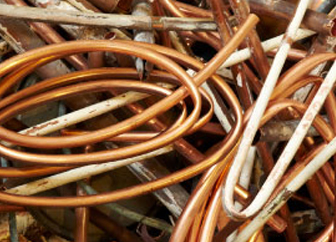
CUTTING MILLS - TO RECOVER COPPER FROM WASTE CABLES
Copper is a very good electrical conductor and a very important material for the electronic industry. This raw material is primarily used in electric cables. Various cable recycling activities help to recover this valuable raw material. These cables are fed into a cutting mill in order to remove the cable sheaths from the copper wire. The copper wires are hence separated and are eventually fed into the secularized processing units.
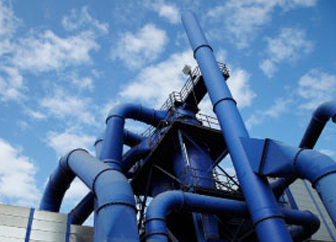
SHREDDERS - TO SEPARATE DIFFERENT MATERIALS
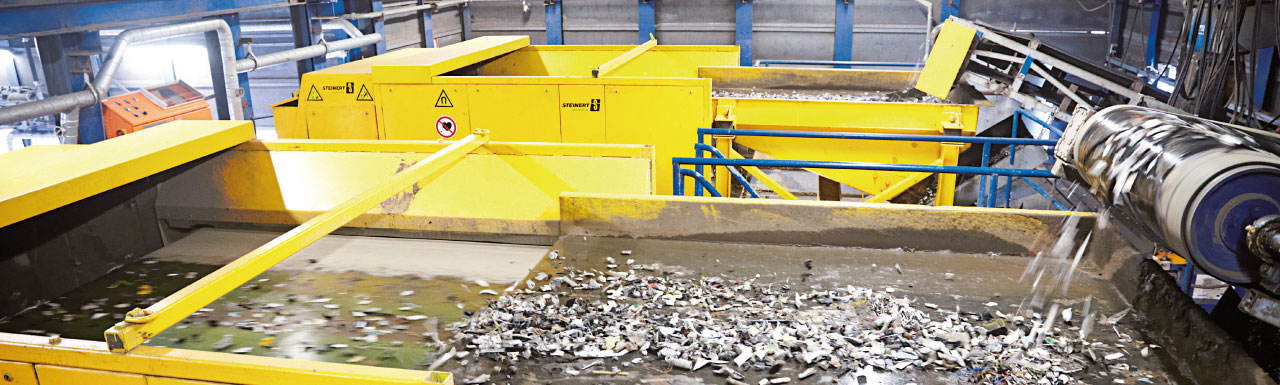
Materials are fed into the shredder through a chute, where rotating hammers break them into smaller, uniform pieces. Once the required size is achieved, the materials pass through a screen for further processing. Fine particles are collected through a dust extraction system, while electromagnetic separators distinguish ferrous from non-ferrous metals. Eddy current separators and sensor-based technologies further classify aluminium and mixed metals, improving material purity, consistency and recovery efficiency.
INDUSTRIAL PROCESSING & MATERIAL RECOVERY
Our equipment and processing technologies support the preparation, separation and recovery of ferrous and non-ferrous metals for industrial reuse. Through mechanical processing, material handling and separation technologies, different metal categories can be prepared according to their physical characteristics, processing requirements and intended industrial applications.
KEY PROCESSING CAPABILITIES
- Industrial Metal Cutting & Shearing
- Hydraulic Baling & Material Compaction
- Heavy-Duty Crushing Operations
- Cable Processing & Copper Recovery
- Shredding & Size Reduction
- Ferrous & Non-Ferrous Metal Separation
- Material Sorting & Classification
- Industrial Material Preparation
PROCESSING EFFICIENCY & INDUSTRIAL APPLICATIONS
Metal processing technologies play an important role in improving material handling, optimizing transportation and preparing recovered metals for further industrial use. Equipment selection and processing methods depend on material composition, dimensions, production requirements and the intended downstream application.
INDUSTRIES & APPLICATIONS
- Steel Manufacturing & Foundries
- Ferrous & Non-Ferrous Metal Processing
- Automotive Metal Recovery
- Cable & Wire Processing
- Industrial Manufacturing
- Metallurgical Operations
- Metal Recycling Facilities
- Secondary Raw Material Production